The focus has moved beyond setting housing targets to the more complex challenge of delivery, specifically, how planning reform and regional growth can be translated into high-quality, large-scale places.
For Prior + Partners, discussions were underpinned by the launch of Place+, our digital placemaking platform. Bringing together placemaking expertise and digital innovation, its first tool, the National Place Portrait, framed much of our team’s thinking and informed several panel contributions.
The emphasis remained on the “big picture” of development: how policy, economics, and masterplanning align to shape deliverable outcomes in an increasingly complex planning environment.
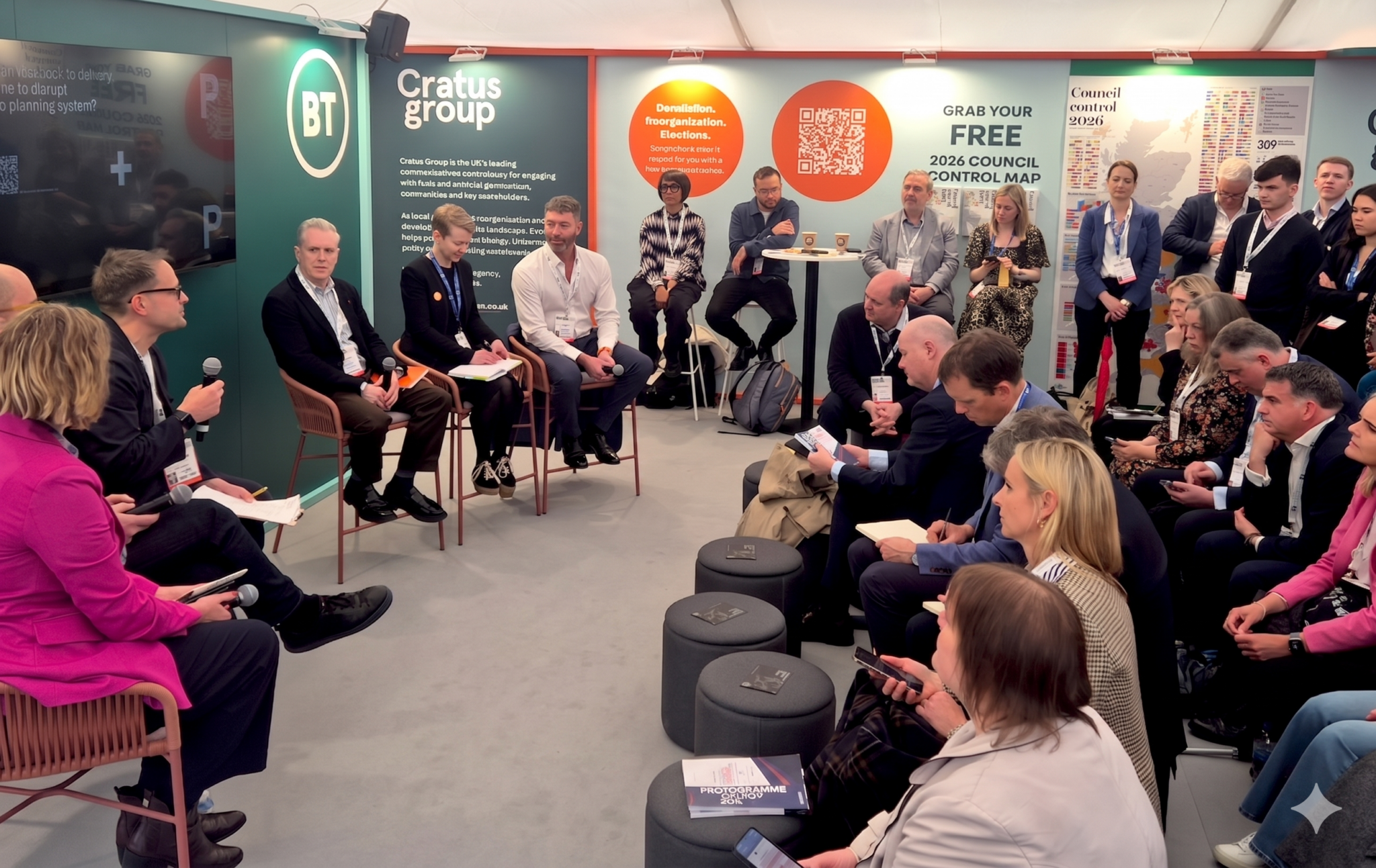
From deadlock to delivery: time to disrupt the planning system?
A central part of our programme was hosting a panel session in partnership with Cratus Group, bringing together senior leaders from policy, local government, and the development sector.
The discussion moved beyond abstract growth figures to focus on the “how” of planning reform. It explored the disruptive thinking needed to translate the government’s growth agenda into tangible delivery on the ground. A key theme was the current system bottlenecks and the growing recognition that successful large-scale masterplanning now depends on a more proactive, evidence-led approach that can anticipate and overcome planning deadlocks earlier in the process.


Alongside this, Prior + Partners contributed to a series of additional panel discussions across UKREiiF spanning planning reform, evidence, and digital practice. These sessions reflected a wider industry shift towards more joined-up thinking between policy, delivery, and the growing use of data and digital tools in shaping decision-making. The overlap with organisations across the proptech and planning technology space, including LandTech, underlined how digital capability is becoming increasingly embedded in the planning system rather than sitting alongside it.


Advancing the scale of regional growth
Throughout the conference, our team engaged with regional pavilions and partners to discuss the future of the UK’s most significant growth corridors, many of which Prior + Partners is actively working on.
A recurring theme was the need for a unified strategic vision, one that ensures infrastructure, social value, and economic drivers are considered together from the outset of a masterplan.
Whether discussing town centre regeneration or the expansion of innovation districts, the focus remained consistent: how strategic masterplanning can help bridge the gap between high-level ambition and deliverable spatial frameworks for local authorities and private partners alike.


A digital-led approach to place
The launch of Place+ this week provided a practical foundation for many of these conversations. The first release – the free-to-access National Place Portrait – offers a single, interactive view of England and Wales, bringing fragmented public datasets into a coherent spatial framework.
By enabling earlier-stage analysis of place conditions, it supports more informed discussions about growth, constraints, and opportunity, precisely the issues at the centre of this year’s UKREiiF debate.
Looking ahead
UKREiiF 2026 underscored a clear sector shift from ambition-setting to delivery-focused thinking.
We are looking forward to continuing these conversations and translating them into work that supports the delivery of better places.
More updates on the evolution of Place+ will follow. In the meantime, we invite you to explore the National Place Portrait and see how it can support more informed decision-making by visiting placeplus.priorandpartners.com


